
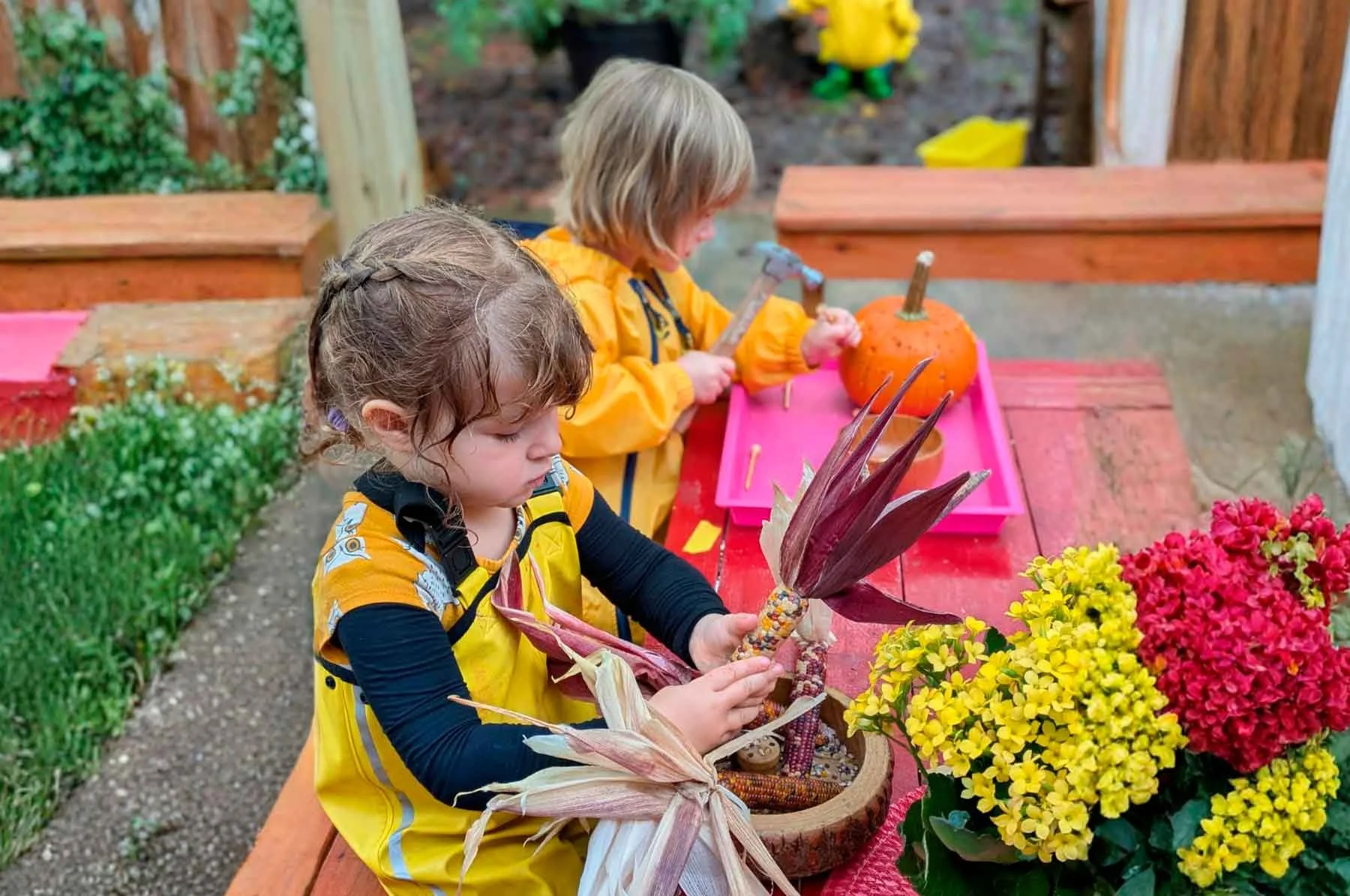
Montessori Luna is dedicated to cultivating a deeply enriching educational environment in both our indoor and outdoor classrooms—one that nurtures independence, self-confidence, kindness, and respect within a diverse and globally minded community. Our intimate, small-scale setting allows us to truly know each child and engage them in purposeful, meaningful learning experiences tailored to their individual interests and developmental needs.
Our home-like environment is intentionally designed to feel warm, inviting, and grounded in nature. The expansive outdoor classroom features natural materials, mature trees, tunnels, hammocks, wooden stumps, a mud kitchen, and a covered area for year-round exploration. These thoughtfully curated elements create a calm and inspiring space where children can explore, discover, and grow at their own pace. In both indoor and outdoor settings, our carefully prepared environments support children in feeling safe, empowered, and ready to engage fully with the world around them.
“The essence of independence Is to be able to do something for one’s self.” Maria Montessori
Our Curriculum
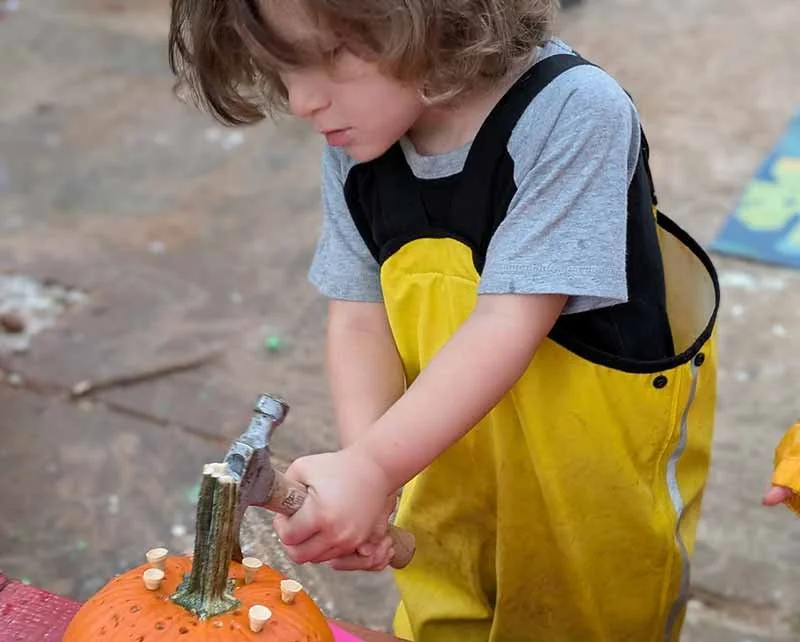
Practical Life
Through repeated practice of practical life skills, children learn how to complete tasks from beginning to end by following a clear sequence of steps. These activities reflect many aspects of daily life at home, such as buttoning and zipping clothing, setting the table, watering plants, preparing food, and arranging flowers. Grace and courtesy lessons further support children’s development by introducing culturally appropriate social behaviors in an engaging and enjoyable way.
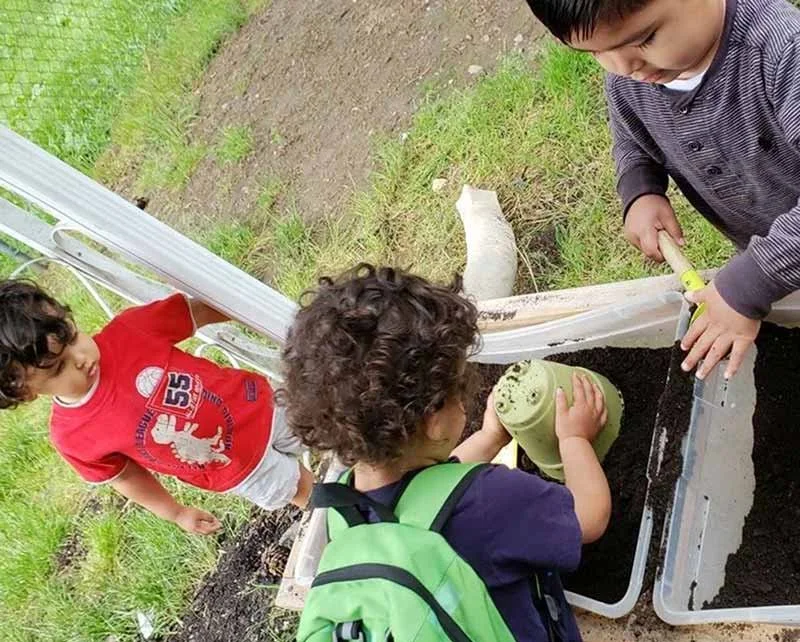
Gardening & Environmental Awareness
Math materials help the child learn and understand mathematical concepts by working with concrete materials. This work gives children a solid understanding of basic mathematical principles, prepares them for later abstract reasoning, and helps to develop problem-solving capabilities. This area includes a range from number recognition, place value, subtraction, addition and ordinal counting; all the way to multiplication and division.
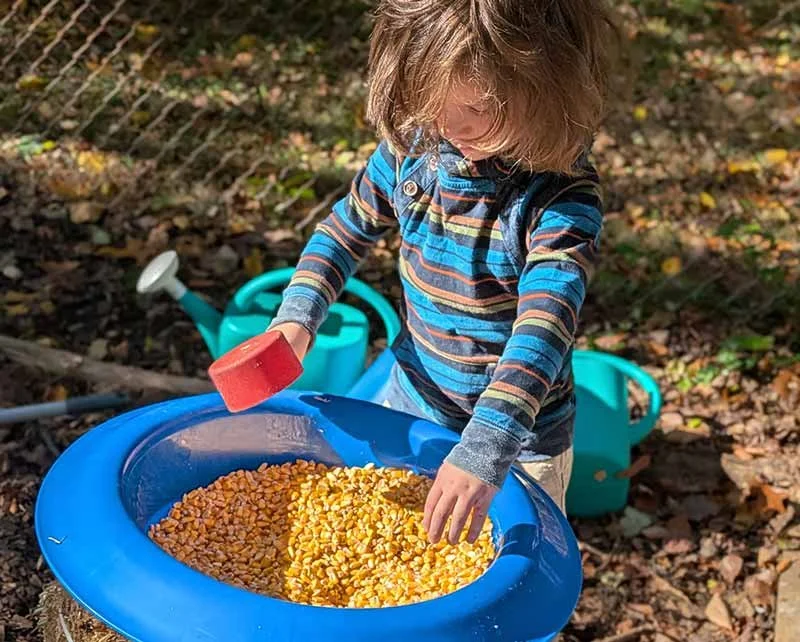
Sensorial
Sensorial materials serve as essential tools for children’s development. The activities in this area help children learn about shapes, colors, spatial relationships, and logical thinking. Through hands-on exploration—touching, seeing, smelling, tasting, listening, and observing—children learn to order, compare, and classify the physical properties of their environment. These experiences enhance children’s awareness and build a rich foundation of sensorial understanding that supports how they perceive and make sense of the world around them.
Language
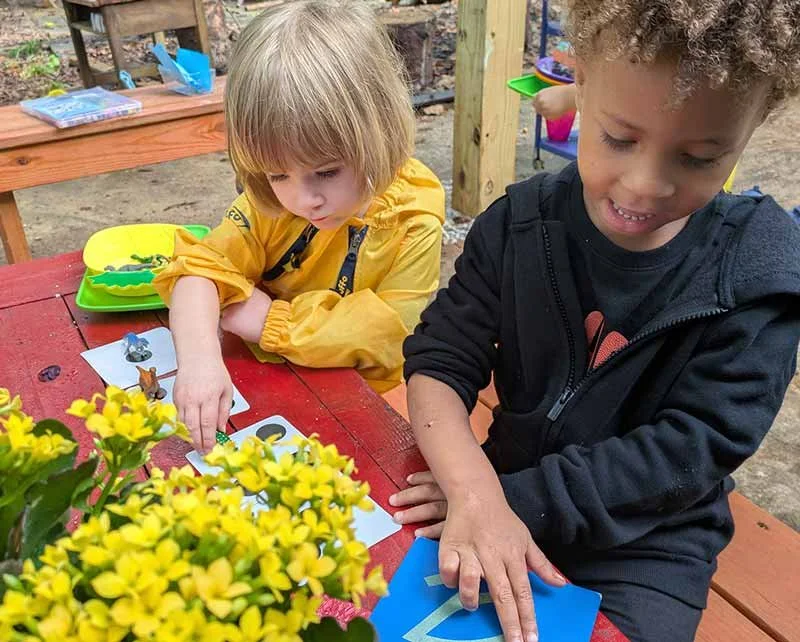
Language development is essential to a child’s overall growth. The Montessori environment is rich in opportunities for oral language, allowing children to engage in conversations, stories, and songs. Through materials such as sandpaper letters, children connect sounds with symbols, supporting the development of early reading and writing skills. As they progress, children build reading comprehension, sentence structure, vocabulary, and written expression.
Math
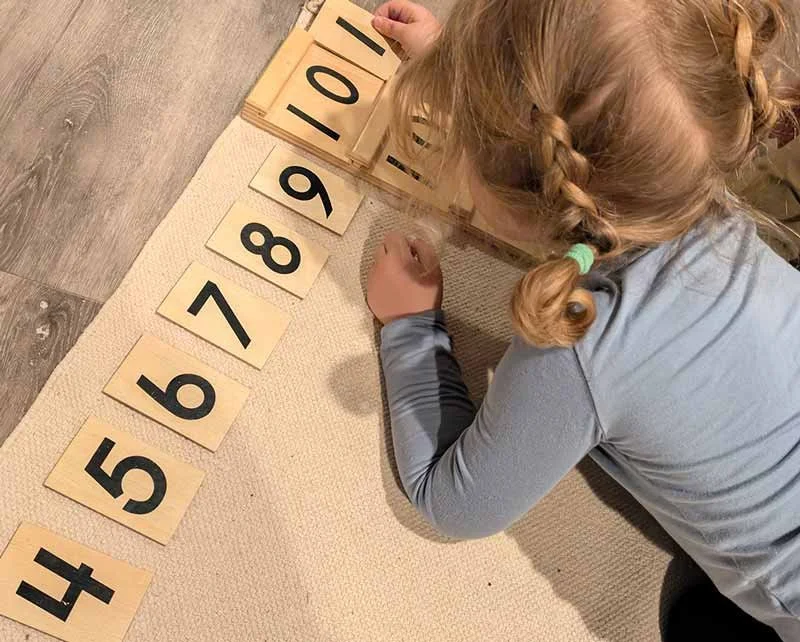
Math materials help the child learn and understand mathematical concepts by working with concrete materials. This work gives children a solid understanding of basic mathematical principles, prepares them for later abstract reasoning, and helps to develop problem-solving capabilities. This area includes a range from number recognition, place value, subtraction, addition and ordinal counting; all the way to multiplication and division.
Cultural Studies
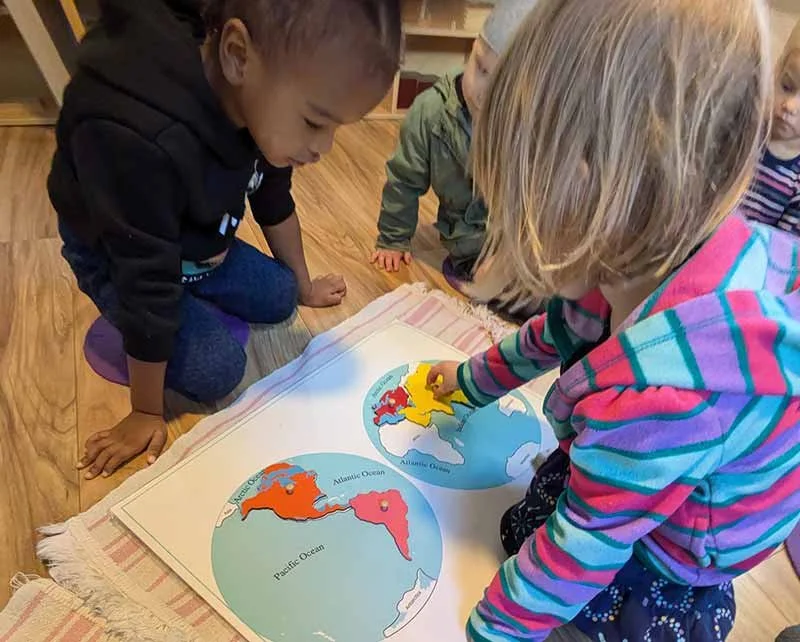
Cultural studies encompass geography, biology, botany, zoology, physical science, art, and music. These subjects are often introduced to reinforce concepts already being explored in the classroom. For example, children learn about people and cultures from around the world in connection with their geography studies. Expanding the scope of these foundational areas helps children develop broad knowledge, a deeper understanding, and a genuine appreciation for the world around them.
Soccer
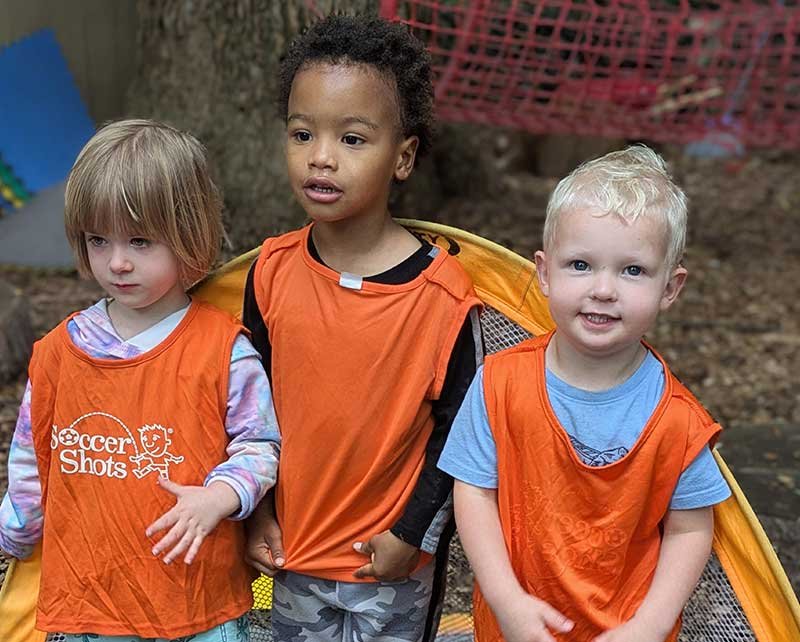
Our soccer coach utilizes creative and imaginative games to focus on basic soccer skills like dribbling, passing, and shooting. Positive character traits such as respect, teamwork, and appreciation are highlighted in each session.

Spanish
As part of a global community, Spanish is taught as a second language. Lessons are delivered in both English and Spanish and children are consistently exposed to folkloric Spanish music.
Yoga
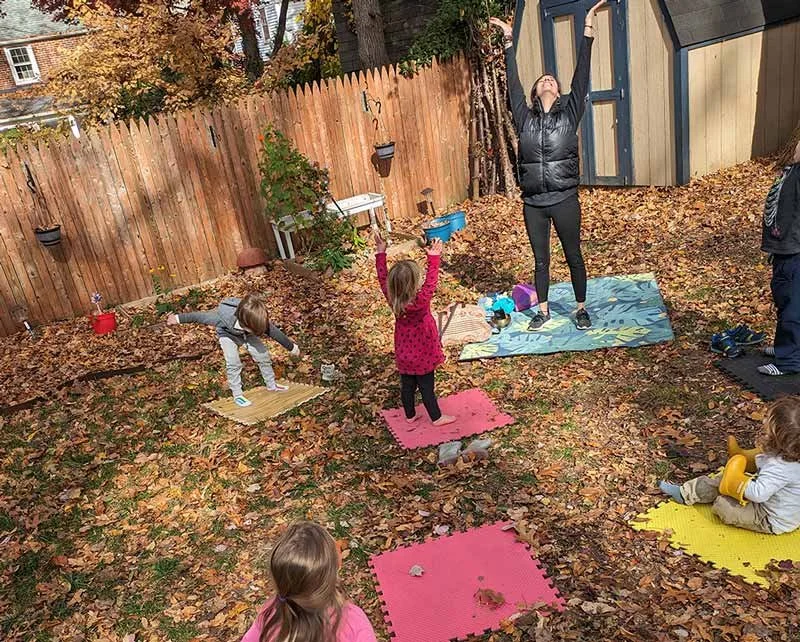
Our yoga guide designs our sessions to help children develop balance, body awareness, strength, flexibility, and coordination while teaching the basic fundamentals of waiting your turn, breathing, gratitude and emotion awareness.
ART
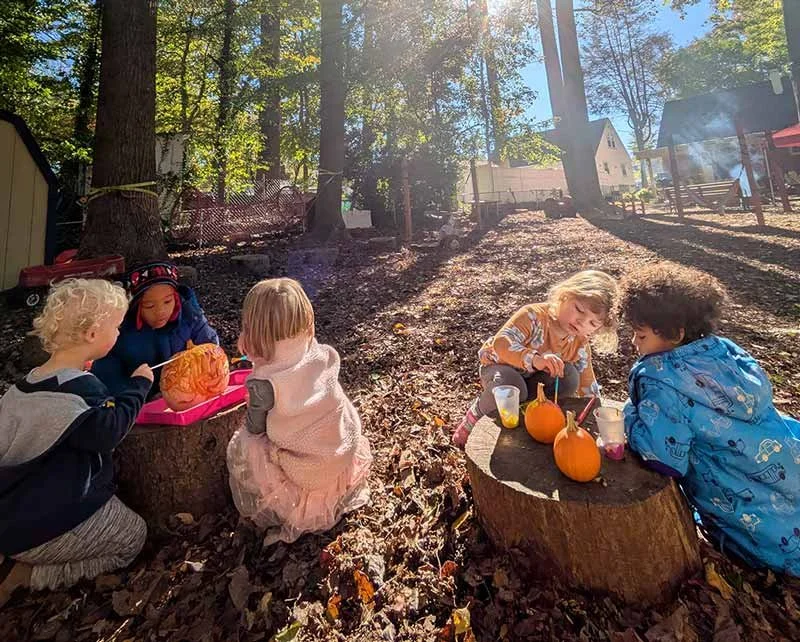
Our art teacher, Ms. Layne, designs her lessons based on individual needs and children’s preferences. Finger paint, clay, and an abundance of hands-on activities help our children to develop their fine motor skills and art appreciation.